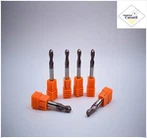
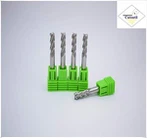
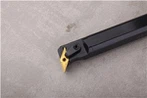
Compared with many other mechanical blades, cemented carbide blade is a special mechanical blade, its comprehensive performance and processing quality are much higher than ordinary blades, and its processing cost is relatively high, so we are choosing cemented carbide blades What should I pay attention to? Here is a brief introduction to the basic performance and identification methods of cemented carbide blades.
The working part of the cemented carbide insert is the part that generates and handles chips, including the cutting edge, the structure to break or roll up the chips, the space for chip removal or storage, and the passage of cutting fluid. Therefore, when choosing a cemented carbide blade, you must pay attention to the cutting edge of the blade.
The harder the material of the cemented carbide blade, the better its wear resistance, the higher the hardness, the lower the impact toughness, and the more brittle the material. Hardness and toughness are a contradiction, and it is also a key that the blade material should overcome. For cemented carbide blades, ordinary coatings can be selected appropriately in the selection of materials with relatively better toughness, that is, a little higher cobalt content.
The geometric parameters of the cutting part of the cemented carbide insert have a great influence on the cutting efficiency and the quality of the machining. Increasing the rake angle can reduce the plastic deformation when the rake face squeezes the cutting layer, and reduce the frictional resistance of the chip flowing through the front, thereby reducing the cutting force and cutting heat. However, increasing the rake angle will reduce the strength of the cutting edge and reduce the heat dissipation volume of the cutter head.
Due to the high hardness of cemented carbide blades, the toughness is significantly lower than that of other blades. Therefore, when installing and removing the blades, avoid the impact of the blade and cause the blade to break. From this point, you can also distinguish the difference between cemented carbide blades. .
The second is to distinguish from the grades on the cemented carbide blades. I believe this is the most common and most convenient method for everyone, so you must pay attention to distinguishing the grades of the blades when purchasing cemented carbide blades.