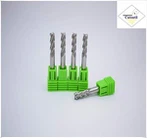
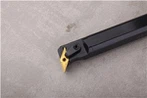
The characteristics of cemented carbide milling cutters: It has high hardness, strength, wear resistance and corrosion resistance, and is known as "industrial teeth". It is used for cutting high-hardness materials and is widely used in military industry, stainless steel, and machining , Metallurgy, petroleum drilling, mining tools, electronic communications, construction and other fields, with the development of downstream industries, the market demand for cemented carbide milling cutters continues to increase. And in the future, the manufacturing of high-tech weapons and equipment, advances in cutting-edge science and technology, and the rapid development of nuclear energy will greatly increase the demand for high-tech and high-quality and stable carbide milling cutter products.
Hard alloy milling cutter hardness testing method: Hard alloy milling cutter hardness testing mainly uses Rockwell hardness tester to test the HRA hardness value. The PHR series portable Rockwell hardness tester is very suitable for testing the hardness of cemented carbide milling cutters. The weight accuracy of the instrument is the same as that of the desktop Rockwell hardness tester, and it is very convenient to use and carry.
Cemented carbide is a kind of metal. The hardness test can reflect the difference in mechanical properties of cemented carbide materials under different chemical composition, structure and heat treatment process conditions. Therefore, the hardness test is widely used in the inspection of cemented carbide properties and the supervision of heat treatment. The correctness of the process and the research of new materials.
It is a non-destructive test, and the test method is relatively simple. The hardness test of cemented carbide has strong adaptability to the shape and size of the test piece, and the test efficiency is high. In addition, there is a certain correspondence between the hardness of cemented carbide materials and other physical properties. For example, hard alloy hardness test and tensile test are basically testing the ability of metal to resist plastic deformation, and these two tests are testing the similar characteristics of metal to some extent. Therefore, the test results are completely comparable. Cemented carbide tensile test equipment is huge, complex operation, sample preparation, and low test efficiency. For many metal materials, there is a conversion table for hardness test and tensile test. Therefore, when testing the mechanical properties of cemented carbide materials, more and more hardness tests are used instead of tensile tests.
Hard alloy hardness is generally tested with Rockwell hardness tester HRA scale or Vickers hardness tester. In practice, people mainly use Rockwell hardness tester to test HRA hardness. PHR series portable Rockwell hardness tester is very suitable for testing the hardness of cemented carbide. This instrument weighs only 0.7kg and has the same accuracy as the desktop Rockwell hardness tester. When measuring the hardness of cemented carbide, the PHR series portable Rockwell hardness tester produced by Tianxing Company can test cemented carbide workpieces with a thickness or diameter below 50mm, and can test cemented carbide workpieces with a diameter as small as 2.0mm, and can test the inner diameter of less than 30mm tubular carbide workpiece. It can also be used at the production site, sales site or material warehouse. This instrument is used to test cemented carbide workpieces easily, quickly, and without damage, and can perform piece-by-piece hardness testing on batches of finished or semi-finished cemented carbide workpieces.