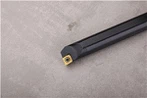
1. Solid carbide tools, including twist drills, milling cutters, reamers, boring cutters, milling blades, ball-end milling cutters, saw blade milling cutters, taper milling cutters, smooth plug gauges, round bars and step drills .
2. Alloy-inlaid tools, including reamers, spiral end mills, drilling and expanding tools, automotive wheel cutters, three-sided blades, T-shaped milling cutters and various forming tools.
3. Indexable tools, including cemented carbide indexable end mills, indexable face milling cutters, indexable dovetail milling cutters and indexable three-sided cutting edges.
4. High-speed steel cutting tools, including high-speed steel forming milling cutters, left-hand drills, spherical milling cutters, cobalt high-speed steel cutting tools and various non-standard forming high-speed steel cutting tools.
5. Industry-specific knives, including special knives for the automotive industry, special knives for the mobilization machine industry, special knives for the sewing machine industry, special knives for the mold industry, special knives for the textile machinery industry, and special knives for the printed circuit board industry. Cemented carbide classification and usage- Cemented carbide classification and usage, until the national standard is officially released, there is no strict specification in the relevant domestic books, magazines, and materials. They are usually classified according to the alloy composition, and the usage description is relatively scattered
Classification Tungsten carbide-based cemented carbide: Including WC-Co, WC-TaC-Co, WC-TiC-Co, WC-TiC-TaC-Co, WC-Ti-TaC-NbC-Co and other alloys, these alloys are all carbonized Tungsten is the main component.
Titanium carbide-based or titanium carbonitride-based cemented carbide: usually TiC or Ti (C, N) as the basic component and Ni-Mo as a binder. There have been many new developments in this type of cemented carbide in recent years, such as the development of high-performance Ti(C, N)-based cermets by adding multi-element compound carbide solid solutions containing heavy metal elements such as Ta and W.
Chromium carbide-based cemented carbide: a cemented carbide based on Cr3C2 and Ni or Ni-W as a binder. It is usually used as wear-resistant and corrosion-resistant parts. In recent years, it has also been widely used in decorative parts. Such as bracelets and so on.
Steel-bonded cemented carbide: A cemented carbide based on TiC or WC and steel as a binder. It is an alloy that can be machined and heat treated. It is between traditional cemented carbide and alloy steel. An engineering material between.
Coated cemented carbide: usually refers to the coating of several micrometers of TiC, TiN, Ti (C, N), Al2O3, etc. on the tough tungsten carbide-based cemented carbide substrate by chemical vapor deposition or physical coating method Hard compounds are produced.