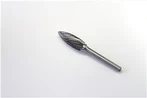
Carbide inserts, also known as tungsten carbide inserts, are used in machining processes such as milling, turning, and drilling. They are made from tungsten carbide, which is a compound of tungsten and carbon, often mixed with cobalt or other elements to improve their properties. The grades of carbide inserts are typically classified based on their composition, hardness, toughness, and wear resistance. Here are some common types of carbide insert grades:
K Grades (ISO Classification: K10, K20, K30, etc.)
These grades are primarily used for cutting non-ferrous metals and non-metallic materials.
K10 is harder and more wear-resistant, suitable for high-speed cutting.
K20 is a general-purpose grade, offering a good balance between hardness and toughness.
K30 is tougher, designed for interrupted cuts and roughing operations.
P Grades (ISO Classification: P10, P20, P30, etc.)
These grades are intended for cutting steel and ferrous materials.
P10 is harder and more wear-resistant, suitable for finishing operations.
P20 is a general-purpose grade, offering a balance between hardness and toughness.
P30 is tougher, designed for heavy-duty machining and interrupted cuts.
M Grades (ISO Classification: M10, M20, M30, etc.)
These grades are designed for mixed applications, including both steel and cast iron.
M10 is harder and more wear-resistant, suitable for precision machining.
M20 is a general-purpose grade, providing a balance of properties.
M30 is tougher, designed for heavy-duty and interrupted cuts.
C Grades (ISO Classification: C1, C2, C3, etc.)
These grades are used for cutting cast iron and non-ferrous materials.
C1 is harder and more wear-resistant, suitable for finishing operations.
C2 is a general-purpose grade, offering a good balance of properties.
C3 is tougher, designed for roughing and interrupted cuts.
N Grades (ISO Classification: N10, N15, N20, etc.)
These grades are used for cutting non-ferrous materials and aluminum.
N10 is harder and more wear-resistant, suitable for high-speed cutting.
N15 is a general-purpose grade, offering a balance of properties.
N20 is tougher, designed for heavy-duty machining.
S Grades (ISO Classification: S10, S20, S30, etc.)
These grades are used for cutting difficult-to-machine materials like high-temperature alloys and titanium.
S10 is harder and more wear-resistant, suitable for precision machining.
S20 is a general-purpose grade, offering a balance of properties.
S30 is tougher, designed for heavy-duty and interrupted cuts.
Each grade is designed to meet specific requirements in terms of hardness, toughness, and wear resistance, making them suitable for different types of machining operations and materials. When selecting a carbide insert, it's important to consider the type of material being machined, the machining conditions, and the desired surface finish.